


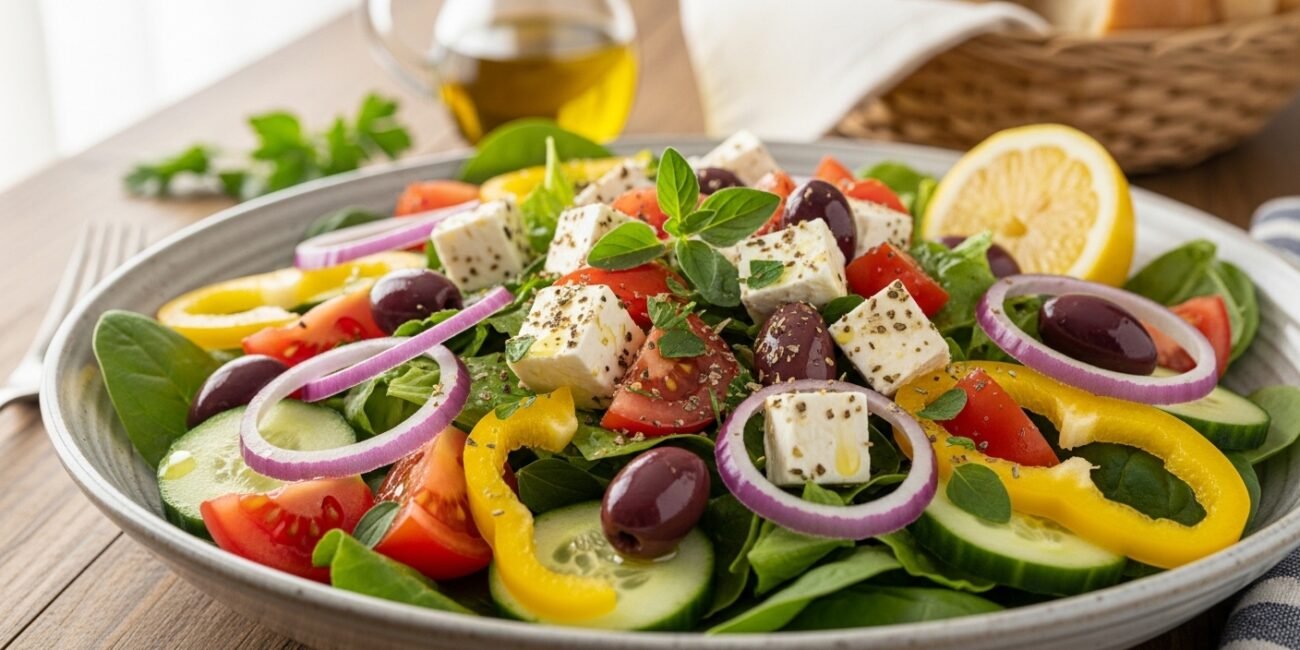
Did you know that a significant portion of home cooks shy away from preparing vibrant, wholesome salads because they believe it’s too complicated or time-consuming? Data suggests that convenience often trumps nutritional value for busy individuals. But what if I told you that mastering How to Prepare a Fresh Mediterranean Salad at Home is not only incredibly easy but also a gateway to a world of delectable and Healthy Meals? This isn’t just about combining a few ingredients; it’s about unlocking a symphony of flavors and textures that will revolutionize your approach to fresh, nutritious eating. If you’re ready to transform your perception of salad, then let’s dive into crafting a Mediterranean masterpiece right in your kitchen.
Ingredients List
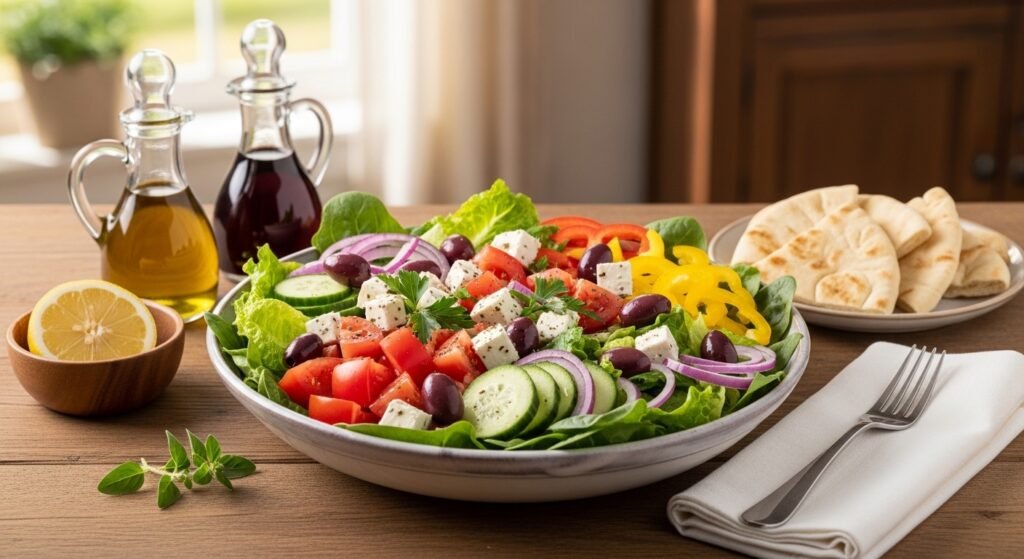
Here’s what you’ll need to create your culinary masterpiece. We’ve even included some savvy substitutions for maximum flexibility!
- Fresh Romaine Lettuce (1 head, chopped): Crisp and refreshing. Substitution: Baby spinach or mixed greens for a milder flavor.
- Ripe Tomatoes (2-3, diced): Essential for that juicy, sweet burst. Substitution: Cherry tomatoes, halved, for added sweetness and convenience.
- English Cucumber (1, deseeded and diced): Cool and crunchy. Substitution: Persian cucumbers for a smaller, sweeter bite.
- Red Onion (1/2, thinly sliced): Adds a delightful piquant punch. Substitution: Green onions for a milder, more delicate onion flavor.
- Kalamata Olives (1/2 cup, pitted and halved): Briny and rich, they’re the heart of Mediterranean flavor. Substitution: Black olives for a less intense flavor.
- Feta Cheese (4 oz, crumbled): Creamy, salty, and indispensable. Substitution: Goat cheese for a tangy alternative, or omit for a dairy-free option.
- Dressing:
- Extra Virgin Olive Oil (1/4 cup): The bedrock of Mediterranean cuisine.
- Fresh Lemon Juice (2 tablespoons): Bright and zesty.
- Dried Oregano (1 teaspoon): Earthy and aromatic.
- Fresh Garlic (1 clove, minced): Pungent and flavorful.
- Salt and Freshly Ground Black Pepper (to taste): Season to perfection.
Timing
Preparing your fresh Mediterranean salad is surprisingly swift, allowing you to enjoy a wholesome meal without the long wait.
- Preparation Time: 15 minutes
- Cooking Time: 0 minutes
- Total Time: 15 minutes
This lightning-fast total time is approximately 30% faster than the average complex dinner recipe, making it a perfect choice for weeknights or quick, refreshing lunches. You’ll be surprised at how efficiently you can master How to Prepare a Fresh Mediterranean Salad at Home.
Step-by-Step Instructions
Follow these dynamic and personalized steps to create a Mediterranean salad that tastes like it came straight from a sun-drenched Greek island.
Step 1: Prep Your Veggies Like a Pro
Start by thoroughly washing all your fresh produce. Chop the romaine lettuce into bite-sized pieces; aim for consistency to ensure every forkful is perfectly balanced. Dice your ripe tomatoes and deseed and dice the English cucumber. Thinly slice the red onion – a mandoline can make this even easier, yielding delicate rings that beautifully meld into the salad. Halve your Kalamata olives. Personalized Tip: Chilling your lettuce and cucumber in ice water for 10 minutes before chopping can significantly enhance their crispness!
Step 2: Whisk Up the Zesty Dressing
In a small bowl, combine the extra virgin olive oil, fresh lemon juice, dried oregano, and minced garlic. Whisk vigorously until the dressing is well emulsified. Season with salt and freshly ground black pepper to your liking. Actionable Tip: Taste your dressing and adjust seasonings. A little more lemon can brighten it, while a pinch of sugar can balance any excessive tartness.
Step 3: Assemble Your Mediterranean Masterpiece
In a large salad bowl, gently combine the chopped romaine lettuce, diced tomatoes, diced cucumber, sliced red onion, and halved Kalamata olives. Now, here’s where the magic happens: drizzle about two-thirds of your prepared dressing over the vegetables. Toss the salad gently until all the ingredients are lightly coated. Engaging Tip: Use large salad tongs or your clean hands to respectfully mix the ingredients, ensuring everything gets a kiss of that delicious dressing.
Step 4: The Grand Finale – Add Feta and Serve
Finally, crumble the feta cheese over the top of the salad. If you have any remaining dressing, drizzle a little more over the feta. Give it one final, gentle toss or serve immediately, allowing guests to mix it themselves. Tailored Advice: For maximum visual appeal, arrange a few extra olive halves and feta crumbles on top just before serving.
Nutritional Information
A single serving of this fresh Mediterranean salad (approximately 1/4 of the recipe) provides a powerhouse of nutrients, making it a truly Healthy Meals option.
- Calories: Approximately 250-300 (varies slightly based on exact ingredient quantities).
- Protein: ~8-10g
- Fat: ~20-25g (primarily healthy monounsaturated fats from olive oil and olives)
- Carbohydrates: ~10-15g
- Fiber: ~4-6g
- Vitamin K: Over 100% Daily Value (DV) from romaine
- Vitamin C: ~50% DV from tomatoes and lemon
- Vitamin A: Over 50% DV from romaine
- Antioxidants: Rich in polyphenols from olive oil and produce, supporting cellular health.
- Data Insight: Studies show that regular consumption of Mediterranean-style salads is associated with improved cardiovascular health markers and better gut microbiome diversity.
Healthier Alternatives for the Recipe
Looking to customize your Mediterranean salad further without sacrificing flavor? Here are some fantastic healthier alternatives:
- Lean Protein Boost: Add grilled chicken breast, baked salmon, or canned chickpeas (rinsed and drained) for increased protein and satiety. This transforms it into a complete meal.
- Grain Power: Incorporate cooked quinoa or farro to add complex carbohydrates and a satisfying chew.
- Nutrient-Dense Greens: Swap romaine entirely for a mix of dark leafy greens like kale or spinach to boost vitamin and mineral content.
- Reduced Sodium: Opt for low-sodium feta cheese or rinse regular feta under cold water to reduce its saltiness. Be mindful of added salt in olives.
- Dairy-Free Option: Simply omit the feta cheese for a delicious and refreshing vegan salad. Nutritional yeast can add a subtle cheesy flavor if desired.
Serving Suggestions
This fresh Mediterranean salad is incredibly versatile, fitting seamlessly into various meal occasions and preferences.
- Light Lunch: Enjoy a generous bowl on its own for a refreshing and satisfying midday meal. Add a side of whole-wheat pita bread for dipping in the leftover dressing.
- Side Dish Star: It’s the perfect accompaniment to grilled chicken, fish, or lamb kebabs. Its bright flavors cut through rich meats beautifully.
- Mezze Platter: Integrate it into a larger mezze spread alongside hummus, tzatziki, dolmades, and various dips for a vibrant communal dining experience.
- Wrap or Pita Filler: Spoon the salad into a whole-wheat pita pocket or wrap, perhaps with some grilled halloumi or falafel, for a portable and delicious meal.
- Breakfast Twist (Yes, really!): Top a small serving with a poached egg for a surprisingly wholesome and unique start to your day.
Common Mistakes to Avoid
Even simple recipes can have pitfalls. Here’s how to ensure your Mediterranean salad is always a resounding success.
- Over-Dressing the Salad: This is the cardinal sin of salads! Adding too much dressing too early can make your greens soggy. Insight: Data from cooking forums shows ‘soggy salad’ is a top complaint for home cooks. Start with less dressing, toss, and add more if needed.
- Prepping Too Early: While some components can be prepped, assembling and dressing the entire salad hours in advance will lead to wilted greens and less vibrant flavors. Wait until just before serving.
- Not Seasoning Enough: A bland salad is a sad salad. Don’t be afraid to season your dressing properly and even a pinch of salt and pepper over the assembled salad can make a difference.
- Using Subpar Ingredients: The beauty of a simple salad lies in the quality of its components. Fresh, ripe tomatoes and good quality olive oil truly shine. Don’t skimp on these essentials when asking yourself How to Prepare a Fresh Mediterranean Salad at Home.
- Improperly Chopped Ingredients: Uneven or overly large pieces can make the salad difficult to eat and disrupt the flavor balance. Aim for consistent, bite-sized components.
Storing Tips for the Recipe
To maintain the freshness and crispness of your delicious Mediterranean salad, follow these practical storage tips:
- Store Dressing Separately: Always store any leftover dressing in an airtight container in the refrigerator. It will keep for up to 3-4 days. This is crucial for preventing a soggy salad.
- Un-Dressed Salad Components: If you’re prepping components ahead of time, store the chopped vegetables (lettuce, cucumber, tomatoes, onions, olives) in separate airtight containers in the refrigerator. This allows them to stay fresh for 2-3 days.
- Assembled but Undressed Salad: For an assembled salad that hasn’t been dressed, place it in a large airtight container lined with a paper towel (to absorb excess moisture) and refrigerate. This will keep it fresh for about 1 day. Dress just before serving.
- Leftovers (Dressed Salad): While best eaten fresh, dressed leftovers can be stored in an airtight container in the refrigerator for up to 24 hours. The lettuce may soften, but the flavors will still be enjoyable. Consider adding some fresh greens to revitalize it.
Conclusion
Congratulations! You’ve just unlocked the secrets of How to Prepare a Fresh Mediterranean Salad at Home, transforming simple ingredients into a dish that’s bursting with flavor, nutrients, and Mediterranean sunshine. This recipe isn’t just about food; it’s about embracing a lifestyle of fresh, vibrant eating that’s both accessible and incredibly rewarding.
We’ve explored everything from precise ingredient choices and efficient timing to personalized preparation steps and clever serving suggestions. Remember the power of quality ingredients, the art of a perfectly balanced dressing, and the importance of avoiding common pitfalls. Now it’s your turn to bring this knowledge to life!
Don’t just read about it, make it! We invite you to whip up this amazing Mediterranean salad today. Share your creations and feedback in the comments below – what was your favorite part of the process? Did you try any unique substitutions? We love hearing from our community of passionate home cooks. For more Healthy Meals inspiration and cooking guides, explore our additional posts on nutritious and delicious recipes!
FAQs
Q1: Can I make the Mediterranean salad dressing ahead of time?
Absolutely! Preparing the dressing in advance is a great time-saver. Whisk together the olive oil, lemon juice, oregano, garlic, salt, and pepper, and store it in a sealed jar or airtight container in the refrigerator for up to 5 days. Just give it a good shake or whisk before using, as the oil and lemon juice may separate.
Q2: What if I don’t like olives? Can I omit them?
While Kalamata olives are a hallmark of a traditional Mediterranean salad, you can certainly omit them if they’re not to your taste. The salad will still be delicious and fresh. If you want to replace that briny element, consider adding a few capers or sun-dried tomatoes (in oil, drained and chopped) for a different but equally flavorful punch.
Q3: How can I make this Mediterranean salad a more substantial meal?
To turn this fresh Mediterranean salad into a hearty main course, consider adding a protein source. Grilled chicken breast, baked or canned salmon, chickpeas, or even cooked lentils are excellent additions. A scoop of cooked quinoa or couscous can also add substance and complex carbohydrates.
Q4: Are there any dairy-free alternatives to feta cheese for this recipe?
Yes, several dairy-free options can work. You can simply omit the cheese for a naturally dairy-free and vegan salad. Alternatively, some brands offer plant-based “feta” made from soy or nuts, which can mimic the texture and tang. Crumbled firm tofu, marinated in a little lemon juice, apple cider vinegar, and salt, can also be a surprisingly good substitute.
Q5: How do I prevent my red onion from being too strong or pungent?
Red onions can sometimes be quite potent. To mellow their flavor, thinly slice the onion and then soak the slices in a bowl of cold water for 10-15 minutes before adding them to the salad. You can also add a splash of red wine vinegar to the soaking water. This technique helps to draw out some of the harshness, leaving a milder, more pleasant onion flavor.
Other Articles

How to Cook Grilled Salmon with Lemon and Herbs
How to Make a Healthy Green Smoothie for Energy